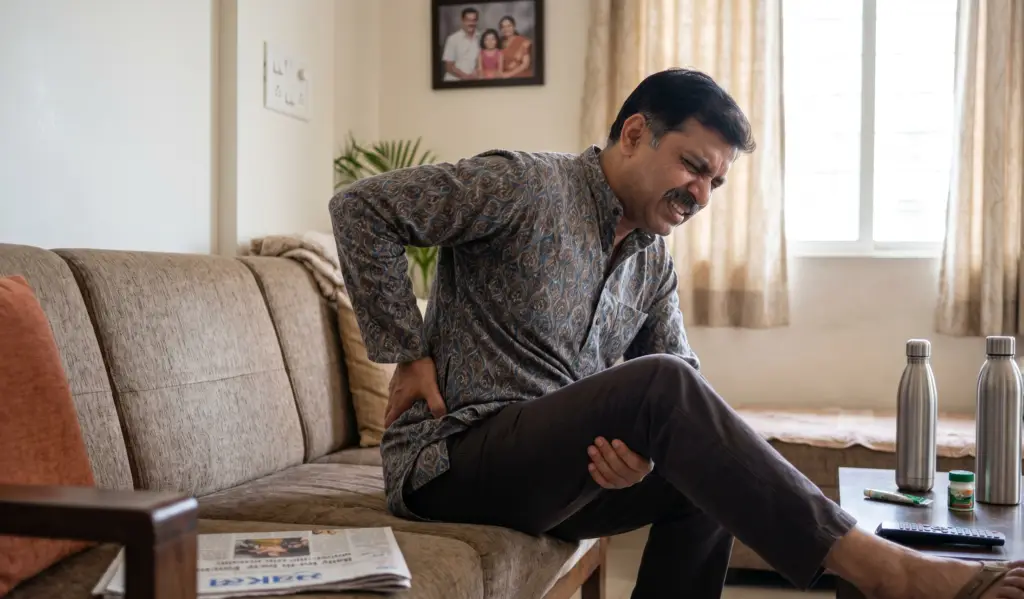
Pain that starts in the lower back and travels down the leg is often caused by sciatica. While mild symptoms may improve with rest, persistent or severe pain should never be ignored. Early diagnosis and appropriate treatment can help relieve pain and prevent long-term nerve damage.
At Neurospineone, Bhubaneswar, Dr. Atmaranjan Dash, an AIIMS-trained neurosurgeon, provides advanced diagnosis and treatment for sciatica and other spine disorders.
Understanding Sciatica
Sciatica is a condition caused by irritation or compression of the sciatic nerve, which is the largest nerve in the body. It extends from the lower back through the buttocks and down each leg.
As a result, pressure on this nerve can cause pain, numbness, tingling, and weakness in the affected leg.
Sciatica is not a disease itself but a symptom of an underlying spinal condition.
What Causes Sciatica?
Several conditions can lead to sciatica, including:
Slipped or herniated disc.
Degenerative disc disease.
Spinal stenosis.
Bone spurs.
Spondylolisthesis.
Spinal injuries or trauma.
Rarely, tumors affecting the spine.
Therefore, identifying the underlying cause is essential for effective treatment.
Common Symptoms of Sciatica
Symptoms usually affect one side of the body and may vary in severity.
Common symptoms include:
Lower back pain.
Pain radiating from the buttock down the leg.
Burning or sharp pain in the leg.
Tingling or “pins and needles” sensation.
Numbness in the foot or toes.
Weakness in the leg or foot.
Moreover, symptoms may worsen after prolonged sitting or standing.
Pain That Travels Down the Leg
One of the hallmark signs of sciatica is radiating pain.
Patients often describe the pain as:
Sharp and shooting.
Burning or electric shock-like.
Continuous or intermittent.
In some cases, the pain may extend all the way to the foot.
Numbness and Tingling Sensations
Compression of the sciatic nerve may cause abnormal sensations such as:
Tingling in the calf or foot.
Numbness in the leg.
A sensation of pins and needles.
Furthermore, these symptoms can interfere with daily activities if left untreated.
Muscle Weakness
As nerve pressure increases, patients may experience:
Weakness in the affected leg.
Difficulty climbing stairs.
Trouble lifting the foot.
Reduced grip while walking.
Consequently, walking and maintaining balance may become difficult.
When Does Sciatica Pain Become Worse?
Sciatica symptoms often worsen during:
Prolonged sitting.
Standing for long periods.
Bending forward.
Lifting heavy objects.
Coughing or sneezing.
Therefore, proper posture and spine care are important to reduce symptoms.
Emergency Warning Signs
Seek immediate medical attention if you experience:
✔ Sudden loss of bladder or bowel control.
✔ Severe weakness in one or both legs.
✔ Numbness around the groin area.
✔ Difficulty walking or standing.
✔ Rapidly worsening symptoms.
These signs may indicate cauda equina syndrome, a rare but serious medical emergency requiring urgent treatment.
Diagnosis at Neurospineone
At Neurospineone, Bhubaneswar, patients undergo a thorough evaluation to determine the exact cause of sciatica.
Diagnostic tests may include:
MRI Scan of the Spine.
CT Scan.
X-rays.
Neurological Examination.
Advanced Imaging Studies.
Accurate diagnosis helps in planning the most suitable treatment approach.
Treatment Options for Sciatica
Most patients improve with conservative treatment. Depending on the severity of symptoms, treatment may include:
Medications to relieve pain and inflammation.
Physiotherapy and rehabilitation.
Lifestyle modifications.
Activity and posture correction.
Epidural steroid injections.
However, surgery may be recommended when symptoms are severe or persistent.
Minimally Invasive and Endoscopic Spine Surgery
When conservative treatment fails, surgery may be necessary to relieve nerve compression.
Advanced surgical options include:
Minimally Invasive Spine Surgery.
Endoscopic Spine Surgery.
Microdiscectomy.
These procedures generally involve smaller incisions, less pain, and faster recovery.
Dr. Atmaranjan Dash and his team follow AIIMS-level neurosurgical protocols to provide personalized and effective treatment.
Preventing Sciatica
Although not all cases can be prevented, certain measures can reduce the risk:
Maintain proper posture.
Exercise regularly.
Strengthen the back and core muscles.
Avoid lifting heavy weights incorrectly.
Maintain a healthy body weight.
Take breaks during prolonged sitting.
Therefore, healthy lifestyle habits play an important role in protecting spinal health.
Contact Information
Dr. Atmaranjan Dash – MCh Neurosurgery (AIIMS New Delhi)
Clinic: Neurospineone, Near SBI ATM, Acharya Vihar, Bhubaneswar, Odisha
Phone: +91 9439971946
Email: atmanranjan@gmail.com
Early diagnosis and timely treatment of sciatica can help relieve pain, restore mobility, and improve overall quality of life.