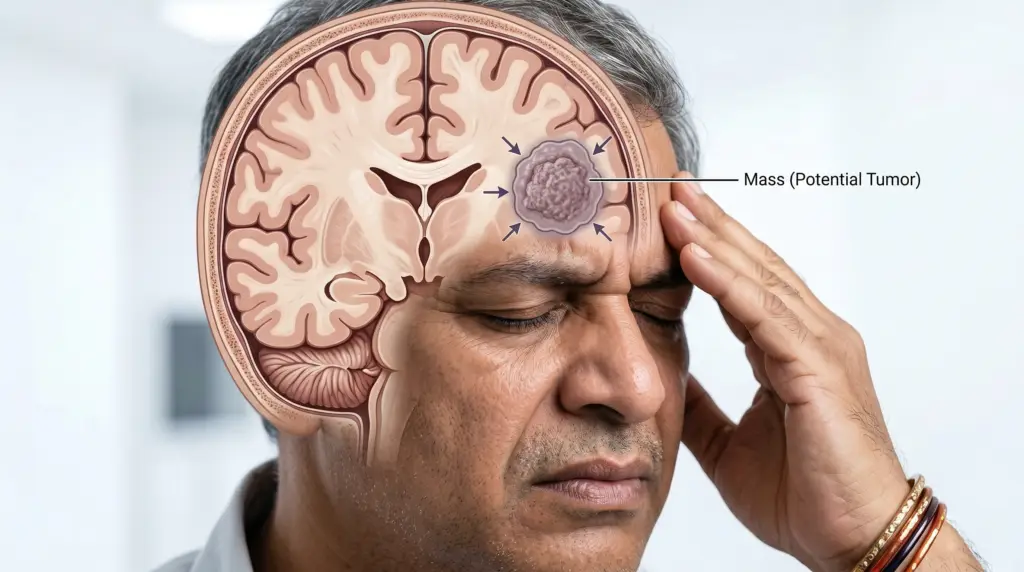
Brain tumors can affect people of any age and may develop slowly or rapidly. Although not every headache or neurological symptom indicates a tumor, certain warning signs should never be ignored. Early diagnosis and timely treatment can improve outcomes and help prevent serious complications.
At Neurospineone, Bhubaneswar, Dr. Atmaranjan Dash, an AIIMS-trained neurosurgeon, provides advanced diagnosis and treatment for brain tumors and other neurological disorders.
Understanding Brain Tumors
A brain tumor is an abnormal growth of cells inside the brain. Some tumors are benign (non-cancerous), while others are malignant (cancerous). Depending on their size and location, brain tumors can affect memory, vision, speech, movement, and other important body functions.
Therefore, recognizing the early warning signs is essential.
Persistent Headaches That Keep Getting Worse
Headaches are common, but headaches caused by a brain tumor are often different.
Seek medical attention if you experience:
-
Frequent headaches that gradually become more severe.
-
Headaches that are worse in the morning.
-
Pain that wakes you from sleep.
-
Headaches associated with vomiting or blurred vision.
Moreover, if usual pain medications do not provide relief, further evaluation may be necessary.
Unexplained Nausea and Vomiting
Persistent nausea or repeated vomiting without an obvious reason should not be ignored.
In particular, vomiting that occurs early in the morning or is accompanied by headaches may indicate increased pressure inside the skull.
Seizures or Sudden Convulsions
Seizures are one of the most common symptoms of brain tumors.
They may appear as:
-
Full-body convulsions.
-
Sudden jerking movements.
-
Brief periods of staring or loss of awareness.
-
Unusual sensations or muscle twitching.
Even a single seizure requires immediate medical evaluation.
Changes in Vision
A brain tumor can affect the nerves responsible for vision.
Warning signs include:
-
Blurred vision.
-
Double vision.
-
Partial loss of vision.
-
Difficulty seeing objects from the side.
Therefore, persistent visual disturbances should always be assessed by a specialist.
Weakness or Numbness in the Body
Some brain tumors interfere with the areas that control movement and sensation.
As a result, patients may experience:
-
Weakness in the arms or legs.
-
Loss of coordination.
-
Difficulty walking.
-
Numbness on one side of the body.
These symptoms should never be ignored, as they may indicate pressure on important parts of the brain.
Problems with Speech and Memory
Brain tumors may affect cognitive functions and communication.
Common symptoms include:
-
Difficulty finding words.
-
Slurred speech.
-
Memory problems.
-
Trouble concentrating.
-
Confusion or personality changes.
Furthermore, family members are often the first to notice these changes.
Loss of Balance and Coordination
Difficulty maintaining balance or frequent falls may occur when a tumor affects certain areas of the brain.
You should seek medical attention if you notice:
-
Unsteady walking.
-
Dizziness.
-
Poor coordination.
-
Difficulty performing routine tasks.
Hearing Problems or Ringing in the Ears
Tumors affecting the auditory nerves may cause:
-
Hearing loss.
-
Persistent ringing in the ears (tinnitus).
-
Difficulty understanding speech.
Consequently, these symptoms should be evaluated without delay.
When Should You See a Neurosurgeon?
Consult a neurosurgeon immediately if you experience:
✔ Persistent or worsening headaches.
✔ Seizures or unexplained fainting.
✔ Weakness or numbness in the limbs.
✔ Sudden vision changes.
✔ Memory loss or personality changes.
✔ Difficulty speaking or understanding speech.
✔ Loss of balance or coordination.
Early diagnosis can make a significant difference in treatment outcomes.
Diagnosis and Treatment at Neurospineone
At Neurospineone, Bhubaneswar, patients receive comprehensive evaluation and personalized treatment.
Diagnostic tests may include:
-
MRI Scan of the Brain.
-
CT Scan.
-
Neurological Examination.
-
Advanced Imaging Studies.
Treatment options depend on the type, size, and location of the tumor and may include:
-
Microsurgical Brain Tumor Removal.
-
Minimally Invasive Neurosurgery.
-
Radiation Therapy.
-
Chemotherapy.
-
Long-term Follow-up Care.
Dr. Atmaranjan Dash and his team follow AIIMS-level neurosurgical protocols to ensure accurate diagnosis and effective treatment.
Recovery and Long-Term Care
Recovery varies from person to person. However, proper follow-up and rehabilitation are important.
Patients are advised to:
-
Take medications as prescribed.
-
Attend regular follow-up appointments.
-
Maintain a healthy lifestyle.
-
Report any new or worsening symptoms immediately.
-
Seek emotional and family support during recovery.
Contact Information
Dr. Atmaranjan Dash – MCh Neurosurgery (AIIMS New Delhi)
Clinic: Neurospineone, Near SBI ATM, Acharya Vihar, Bhubaneswar, Odisha
Phone: +91 9439971946
Email: atmanranjan@gmail.com
Early diagnosis saves lives. If you notice persistent neurological symptoms, consult a specialist promptly for timely evaluation and treatment.