Spinal fusion surgery

Home » Spinal fusion surgery in Bhubaneswar Consult Now and heal!
The spine provides support, stability, and movement to the body. When spinal bones become unstable due to degenerative disc disease, spondylolisthesis, scoliosis, fractures, or other spinal disorders, it can cause severe pain, nerve compression, and difficulty performing daily activities. Spinal Fusion Surgery helps stabilize the spine by permanently joining two or more vertebrae, reducing pain and improving spinal function.
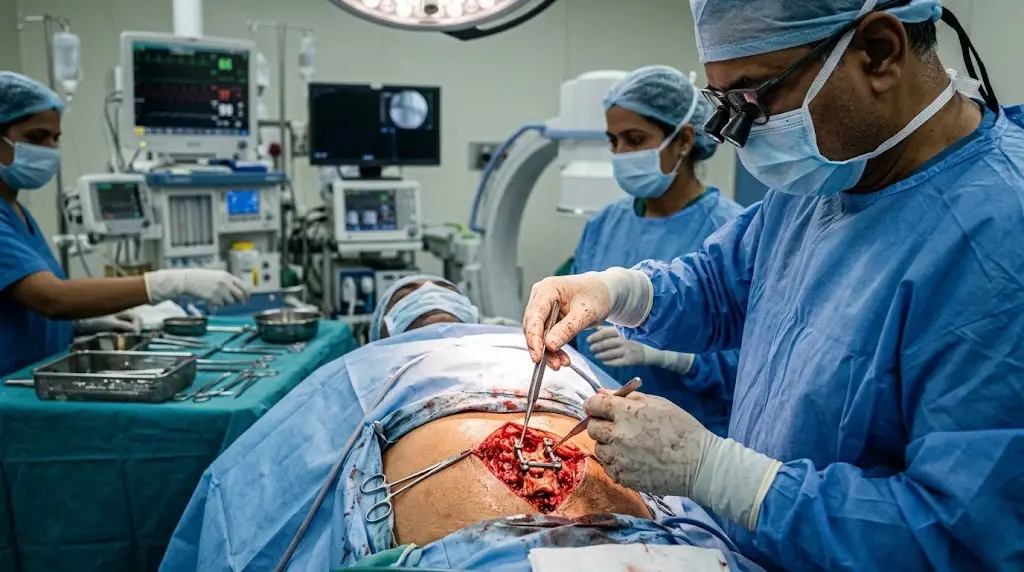
Open abdominal surgery in progress: surgeons in blue gowns and masks work around a patient on the operating table with surgical instruments nearby.
Dr. Atmaranjan Dash, one of the leading Neurosurgeons and Spine Specialists in Odisha, carefully evaluates each patient through clinical examination, MRI scans, X-rays, and other necessary investigations. Based on the diagnosis, he develops a personalized treatment plan focused on long-term relief, spinal stability, and improved quality of life.
Contact Us

🧠

FAQ Related To Spinal Fusion Surgery

🧠
Get answers to common questions about spinal fusion surgery, recovery, hospital stay, rehabilitation, activity restrictions, and long-term outcomes. Dr. Atmaranjan Dash provides expert guidance to help patients make informed decisions and achieve a smoother recovery.
Some discomfort and surgical pain are expected after the procedure, especially during the first few days. However, pain is usually controlled with medications, and most patients experience gradual improvement as healing progresses.
The duration of hospital stay depends on the type of surgery and overall health condition. Most patients stay for a few days and are encouraged to start walking under medical supervision soon after surgery.
Spinal fusion is commonly performed for degenerative disc disease, spondylolisthesis, scoliosis, spinal instability, recurrent slipped discs, and certain spinal fractures that require stabilization.
Yes. Physiotherapy is an important part of recovery. It helps restore strength, improve flexibility, correct posture, and support safe movement while the spine heals.
Most patients require MRI scans, X-rays, blood tests, and other investigations before surgery. These tests help assess spinal stability and allow proper surgical planning.
Recovery varies depending on the patient’s condition and the extent of surgery. Initial healing may take several weeks, while complete spinal fusion and recovery can take several months. Regular follow-up visits are important to monitor progress.