Minimally Invasive Spine Surgery

Home » Minimally Invasive Spine Surgery Consult Now
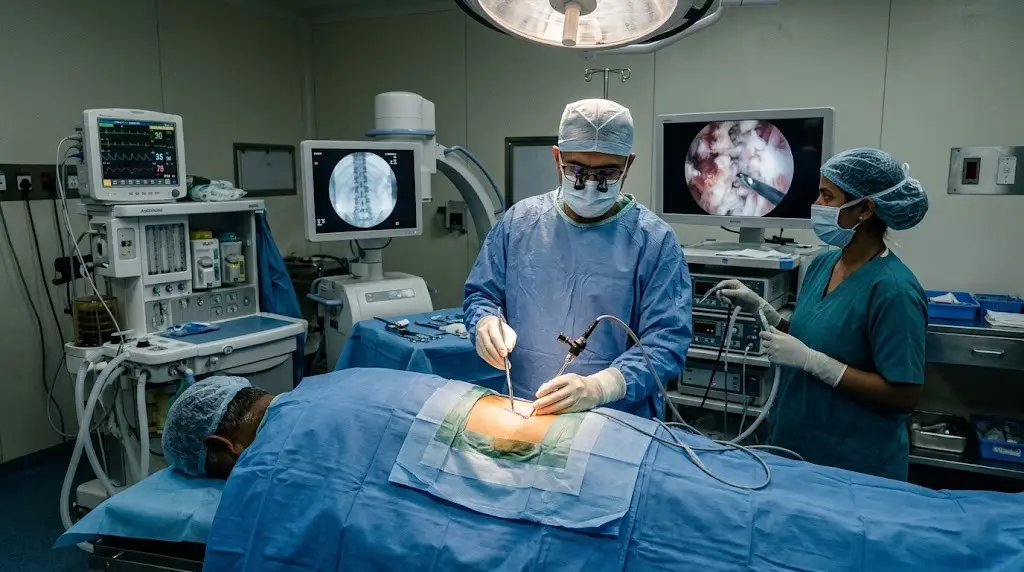
The spine is essential for movement, stability, and protecting the spinal cord. Conditions such as slipped discs, spinal stenosis, degenerative spine disorders, and nerve compression can lead to chronic pain, numbness, weakness, and reduced mobility. Minimally Invasive Spine Surgery (MISS) uses advanced surgical techniques and smaller incisions to treat spinal conditions with less tissue damage, reduced pain, and faster recovery compared to traditional open surgery.
Surgeon in blue scrubs performing abdominal surgery with a patient draped in blue, illuminated by an overhead light, monitors showing internal views in the background.
Dr. Atmaranjan Dash, one of the leading Neurosurgeons and Spine Specialists in Odisha, carefully evaluates each patient through clinical examination, MRI scans, X-rays, and other necessary investigations. Based on the diagnosis, he develops a personalized treatment plan focused on relieving pain, restoring function, and helping patients return to their daily activities as quickly and safely as possible.
Contact Us

🧠

FAQ Related To Minimally Invasive Spine Surgery

🧠
Get answers to common questions about minimally invasive spine surgery, including treatment options, recovery time, hospital stay, benefits, risks, and post-operative care. Dr. Atmaranjan Dash helps patients make informed decisions about their spinal health and treatment.
Minimally invasive spine surgery is an advanced surgical approach that uses small incisions and specialized instruments to treat spinal disorders while minimizing damage to surrounding muscles and tissues.
This technique is commonly used to treat slipped discs, spinal stenosis, sciatica, degenerative disc disease, spinal instability, and certain spinal deformities.
For suitable patients, minimally invasive techniques can reduce blood loss, lower infection risk, minimize tissue damage, and promote faster recovery compared to conventional open spine surgery.
Hospital stays are generally shorter than traditional surgery. Many patients are discharged within one to three days, depending on the procedure and their overall condition.
Yes. Physiotherapy is often recommended to improve strength, flexibility, posture, and mobility, helping patients achieve the best long-term outcome after surgery.
Recovery varies depending on the procedure and individual health condition. Many patients return to light activities within a few weeks, while complete recovery may take several weeks to a few months.